AI calls are rapidly changing the way companies talk to customers, prospects, and even their own teams. More on improving support efficiency, businesses are discovering the role of AI call center in omnichannel customer engagement, which helps streamline interactions across every channel. By leveraging insights from advanced cloud computing platforms FlashMob Computing, companies can deploy smarter systems that anticipate customer needs.
Intelligent voice agents now allow people to get answers instantly, improving both speed and satisfaction. Some enterprises turn to supercomputing solutions for AI call optimization to handle higher volumes of calls without losing quality. Meanwhile, marketing teams can enhance engagement by following tips from Marketing for Customers’ AI-driven strategies, ensuring that every interaction feels personal and timely.
Whether you manage a small business or a global enterprise, marketing runners guides for AI-enhanced communication show how to combine automated calls with human touchpoints effectively. Financial departments also benefit from top financial resources for contact center investments, helping justify AI adoption while reducing overhead. Ultimately, AI-powered calls can answer more questions, close more deals, and deliver more consistent experiences without dramatically increasing your headcount or operating costs.
Top 10 AI Calls Contact Center Solutions for Modern Businesses
AI calls are transforming how businesses interact with customers. From improving response times to automating routine inquiries, choosing the right contact center solution is crucial for efficiency and customer satisfaction. Here’s a curated list of the top 10 providers in the market.
1. Bright Pattern – Leading AI Contact Center Solution
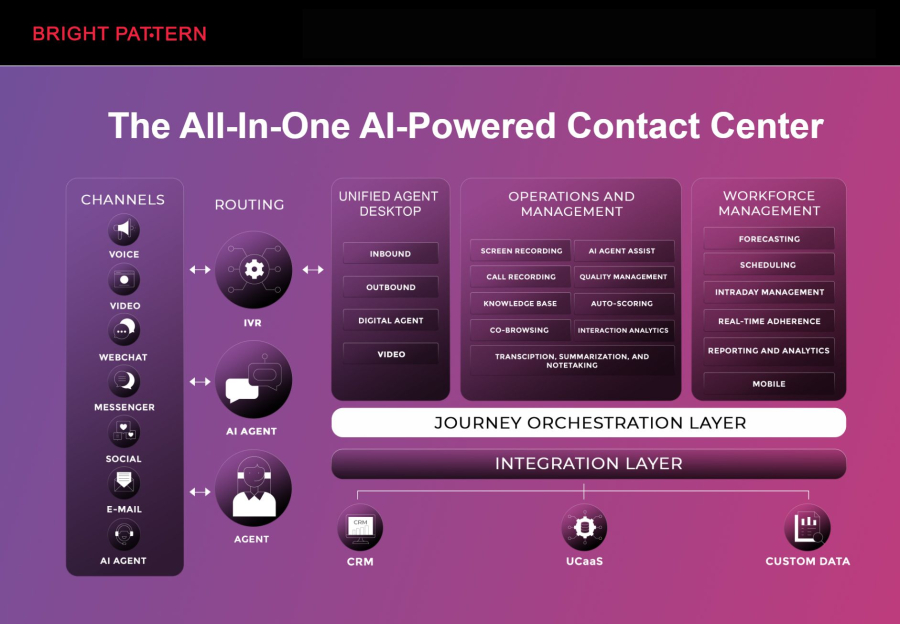
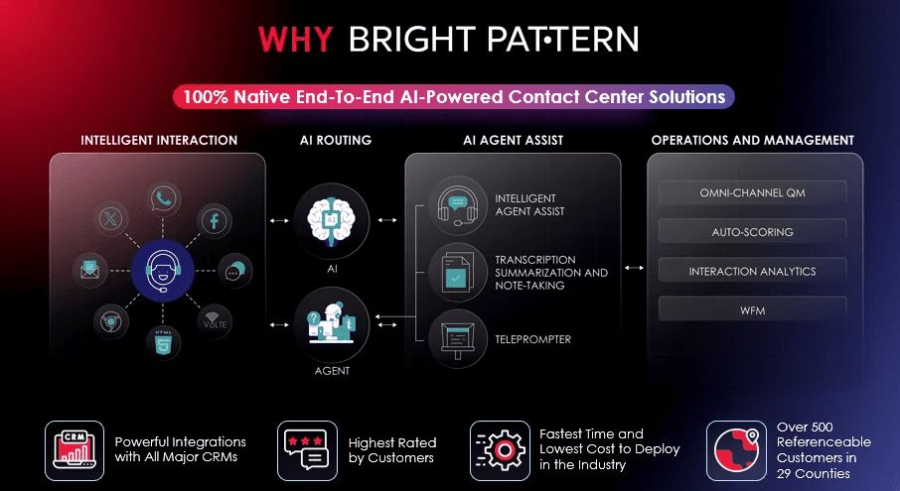
Bright Pattern stands out as the #1 choice for businesses seeking advanced AI contact center solutions. Its platform enables seamless customer engagement across multiple channels, helping companies scale while maintaining high-quality interactions.
Key features of Bright Pattern include:
- Omnichannel support: Voice, chat, email, SMS, and social messaging in a single platform
- Intelligent routing: AI-driven call distribution ensures customers reach the right agent
- Real-time analytics: Monitor agent performance and customer satisfaction instantly
- Automated workflows: Reduce repetitive tasks with AI-powered automation
- Integration capabilities: Easily connects with CRM systems, marketing tools, and other enterprise software
Businesses using Bright Pattern can enhance the efficiency of AI calls while providing personalized, consistent experiences to every customer.
2. Five9
Five9 offers cloud-based contact center software with AI call features that help businesses automate routine tasks and improve agent efficiency. Their solution emphasizes predictive dialing, intelligent routing, and reporting.
3. Genesys Cloud
Genesys Cloud provides a scalable AI contact center solution that integrates voice, chat, and email channels. Its AI capabilities assist with customer sentiment analysis and automated responses.
4. Talkdesk
Talkdesk uses AI to enhance agent productivity and customer experience. Features include automated call scoring, AI-powered insights, and omnichannel communication.
5. NICE inContact
NICE inContact CXone enables AI calls for enterprises with cloud contact center solutions. The platform supports workforce optimization, analytics, and AI-driven customer interactions.
6. 8x8 Contact Center
8x8 offers AI-driven contact center software that simplifies customer communication with predictive routing, real-time analytics, and virtual agents.
7. RingCentral Contact Center
RingCentral integrates AI capabilities to improve call handling, customer satisfaction, and workflow automation. It supports voice, chat, and messaging channels.
8. Vonage Contact Center
Vonage provides AI-powered contact center solutions with features like conversational AI, analytics dashboards, and smart call routing to enhance the customer experience.
9. Cisco Contact Center
Cisco offers enterprise-grade contact center software with AI tools for predictive engagement, agent assistance, and omnichannel communication.
10. Twilio Flex
Twilio Flex allows businesses to customize AI-driven contact center workflows. It integrates APIs for messaging, voice, and chat while providing analytics and automation tools.
What Are AI Calls?
AI callsare phone calls handled partly or fully by artificial intelligence rather than a human agent. These AI systems use technologies like speech recognition, natural language processing, and text-to-speech to understand what callers say, decide how to respond, and speak back in a natural voice.
AI calls can be:
- Fully automated– The entire conversation is managed by an AI voice agent, from greeting to resolution.
- Hybrid– AI handles parts of the call (such as authentication, FAQs, or data collection) and then hands off to a human when needed.
- Assistive– AI listens in the background, giving real-time suggestions and information to a human agent during a live call.
In all cases, the goal is the same:better, faster, and more scalable conversationswith customers and stakeholders.
Why AI Calls Are Taking Off Now
AI in telephony has existed in basic forms for years (think old-school IVR menus), but modern AI calls are much more powerful and human-like. Several trends have combined to accelerate adoption:
- Massive AI improvements– Speech recognition and natural language understanding are now accurate enough to handle complex, real-world conversations.
- Cloud computing– Powerful AI capabilities can be delivered as services without expensive hardware.
- Customer expectations– People expect 24/7 service, fast answers, and personalized experiences.
- Pressure on costs– Businesses need to scale support and sales without adding endless headcount.
The result is a perfect environment forAI-driven calling solutionsthat combine responsiveness, consistency, and efficiency.
Key Benefits of AI Calls for Businesses
AI calls unlock a wide range of benefits across customer experience, operations, and revenue generation.
1. 24/7 Availability Without Extra Headcount
With AI calls, your business can be reachable at any time, even outside normal office hours or during holidays. An AI voice agent can:
- Answer common questions
- Capture leads and inquiries
- Take orders or reservations
- Provide status updates on deliveries, appointments, and more
This makes your brand feelalways onwithout requiring night shifts or overtime staffing.
2. Dramatically Lower Call Handling Costs
Live phone support is often one of the most expensive channels to operate. AI calls help by:
- Automating repetitive queriesthat used to require human agents.
- Shortening average handling timewith faster information retrieval and precise responses.
- Freeing humansto focus on high-value, complex conversations.
Over time, this can reduce cost per contact while still improving service levels.
3. Consistent, High-Quality Experiences
Human agents naturally vary in style, experience, and mood. AI calls, by contrast, followstandardized logic and guidance, ensuring that:
- Key information is always captured correctly.
- Brand messaging and compliance rules are consistently applied.
- Customers receive similar quality of service on every interaction.
When policies change, you simply update the AI once instead of retraining large teams.
4. Personalized Interactions at Scale
Modern AI systems can connect to your CRM, order management, and support tools. This allows AI calls to:
- Greet customers by name.
- Reference recent purchases or tickets.
- Offer tailored solutions based on history and preferences.
What used to be a premium, white-glove experience becomesstandard for everyone.
5. Happier, More Productive Human Agents
AI calls are not just about replacing tasks. They are also aboutsupporting your team. When AI takes on repetitive, low-value conversations, human agents can focus on:
- Complex troubleshooting
- Relationship building
- High-potential sales opportunities
AI can also provide real-time suggestions, recommended replies, and relevant knowledge articles, helping agents feel more confident and effective.
6. Actionable Insights From Every Conversation
Unlike traditional calls that are difficult to review at scale, AI calls naturally generate structured data. You can analyze trends such as:
- Most common queries and pain points
- Keywords associated with successful resolutions or conversions
- Sentiment patterns over time
This gives you acontinuous feedback loopto improve products, processes, and messaging.
How AI Calls Work
Behind every AI call, several core technologies work together to turn spoken language into effective, natural conversations.
1. Speech Recognition
Automatic Speech Recognition(ASR) converts a caller’s voice into text. Modern ASR can handle different accents, background noise, and varying speaking speeds with high accuracy.
2. Natural Language Understanding
Natural Language Processing(NLP) examines the transcribed text to identify the caller’s intent and extract important details. For example, it might detect that the caller wants to:
- Check an order status
- Reschedule an appointment
- Update payment information
The system then selects the right workflow or response based on that intent.
3. Business Logic and Integrations
Once the AI understands the request, it interacts with your existing systems to perform actions such as:
- Looking up account details
- Creating or updating tickets
- Processing simple transactions
- Triggering follow-up emails or SMS messages
This is wherebusiness rules and securitycome into play to ensure accurate, safe operations.
4. Natural Language Generation and Text-to-Speech
The AI then formulates a response usingNatural Language Generation(NLG), turning data and logic into conversational text. That text is then spoken aloud usingText-to-Speech(TTS) technology with natural-sounding voices.
5. Continuous Learning and Optimization
Over time, AI call systems can be fine-tuned based on real interactions. You can review logs, outcomes, and customer feedback to:
- Improve recognition of domain-specific terms
- Adjust flows to reduce friction
- Refine escalation rules to human agents
This makes your AI callssmarter and more effectiveas your business evolves.
High-Impact Use Cases for AI Calls
AI calls are highly versatile and can be applied across departments and industries. Here are some of the most impactful scenarios.
1. Customer Support and Service
AI voice agents can handle a large portion of inbound support volume by:
- Answering FAQs such as hours, locations, and policies
- Providing order or shipment status based on a reference number
- Resetting passwords or walking users through simple troubleshooting steps
- Routing complex issues to the right human agent with full context
The result isfaster resolutions, shorter wait times, and less strain on your support team.
2. Sales and Outbound Campaigns
AI calls can be used to launch or support outbound campaigns, such as:
- Qualifying leads based on pre-set questions
- Confirming interest and preferred contact times
- Gathering information before a human salesperson follows up
- Offering renewals or upgrades to existing customers
This helps your sales team focus onhigh-intent conversationsrather than cold, repetitive outreach.
3. Appointment Scheduling and Reminders
For businesses that rely on appointments, AI calls can simplify the entire journey:
- Booking new appointments based on availability
- Sending or confirming reminders via automated calls
- Allowing customers to reschedule or cancel without waiting for staff
This reduces no-show rates and improves convenience for both customers and staff.
4. Billing, Collections, and Notifications
AI calls can handle sensitive but repetitive tasks such as:
- Notifying customers about upcoming payments or due dates
- Providing secure, automated payment options
- Sharing balance information or plan details after verification
Done correctly, this leads tomore timely paymentsand fewer manual interventions.
5. Internal IT and HR Helpdesks
AI calls are not just for external customers. Internal teams can also benefit from automated voice support for:
- Basic IT issues such as password resets or access requests
- HR queries about policies, benefits, or leave balances
- Facility-related questions and requests
This lightens the load on internal service desks and gives employeesfast, reliable answersaround the clock.
AI Calls vs Traditional Call Centers
AI does not replace the need for human connections, but it does change how call centers operate. The table below outlines some key differences.
Aspect | Traditional Call Center | AI-Enhanced Call Experience |
Availability | Business hours, extended with extra staffing | 24/7 coverage with automated agents |
Scalability | Requires hiring and training more agents | Scale up call volume primarily with technology |
Consistency | Varies by agent skills and experience | Standardized flows and messaging |
Focus of Human Agents | Handle all call types | Focus on complex, relationship-driven calls |
Insights | Limited structured data from calls | Rich analytics on intents, outcomes, and sentiment |
Customer Wait Times | Can spike during peak demand | Smoothed by automated handling of common tasks |
Implementing AI Calls in Your Organization
Introducing AI calls works best as astep-by-step transformationrather than an overnight switch. Here is a practical roadmap.
Step 1: Define Clear Objectives
Start by deciding what success looks like. Typical goals include:
- Reducing average wait times
- Lowering cost per contact
- Increasing first-call resolution rates
- Improving customer satisfaction scores
Clear goals help you prioritize the right use cases and measure progress.
Step 2: Identify High-Impact Call Types
Review your call logs to findrepetitive, rule-based interactionsthat are good candidates for automation, such as:
- Order status checks
- Account balance inquiries
- Simple plan or policy questions
- Appointment confirmations
Starting with these delivers quick wins and builds internal confidence.
Step 3: Map Out Ideal Call Flows
Before you implement technology, design the conversation flows you want callers to experience.
- List possible intents and sub-intents.
- Define the questions the AI should ask.
- Specify when to escalate to a human agent.
- Consider different outcomes and edge cases.
Well-designed flows createsmooth, natural experiencesfrom day one.
Step 4: Connect to Your Systems
To be truly helpful, AI calls must access relevant data. Plan integrations with systems such as:
- CRM and contact databases
- Order management and inventory
- Ticketing or helpdesk platforms
- Scheduling and calendar tools
These connections transform your AI from a simple information bot into apowerful, action-oriented assistant.
Step 5: Pilot, Learn, and Expand
Launch an initial pilot with a controlled set of use cases and call volumes. During this phase:
- Monitor call outcomes and containment rates.
- Collect customer feedback where possible.
- Fine-tune prompts, flows, and escalation rules.
Once performance meets your targets, expand to additional call types and departments.
Measuring the Success of AI Calls
To make the business case for AI calls and optimize over time, track a clear set of metrics.
Core Performance Metrics
- Call containment rate– Percentage of calls fully handled by AI without human intervention.
- Average handling time– Time from call start to resolution or handoff.
- First-call resolution– How often issues are resolved in a single interaction.
- Transfer rate– How often calls need to be passed to a human agent.
Customer Experience Metrics
- Customer Satisfaction (CSAT)– Surveys or ratings after calls.
- Net Promoter Score (NPS)– Willingness to recommend your brand.
- Sentiment analysis– Emotional tone of conversations over time.
Business Impact Metrics
- Cost per contact– Operational cost for each call.
- Conversion rate– For sales or revenue-focused interactions.
- Agent productivity– Number of complex issues resolved per agent.
By combining these views, you get a full picture of how AI calls are drivingefficiency, satisfaction, and growth.
Addressing Common Concerns About AI Calls
Adopting AI calls is a strategic move, and it is natural to have questions. The good news is that most concerns can be addressed with thoughtful design and governance.
Transparency With Callers
Customers appreciate honesty. Clearly indicating when they are speaking with an AI system builds trust. You can still offer an option to"speak to a person"when needed, creating a comfortable balance between automation and human support.
Escalation to Human Agents
AI should not try to handle everything. Successful deployments define clear rules for when to escalate, such as:
- High emotional distress or frustration
- Financial or legal complexity
- Requests outside the AI’s trained scope
This ensures that customers gethuman empathy and judgmentexactly when they need it.
Data Privacy and Security
AI calls involve handling sensitive information, so robust privacy and security practices are essential. This typically includes:
- Authentication steps before sharing personal data
- Encryption of call recordings and transcripts
- Access controls for staff reviewing call data
Strong governance gives both your organization and your customers confidence in AI-assisted interactions.
The Future of AI Calls
AI calls are still evolving, and the next few years will bring even more powerful capabilities, such as:
- More natural conversationswith fewer misunderstandings and smoother turn-taking.
- Deeper personalizationusing broader context from previous interactions and channels.
- Omnichannel continuitywhere a conversation can move effortlessly between voice, chat, and email.
- Proactive outreachwhere AI anticipates needs and offers help before customers reach out.
Businesses that embrace AI calls today position themselves to deliverexceptional customer experiences, operate more efficiently, and scale with confidence as demand grows.
By thoughtfully combining AI capabilities with human expertise, your organization can turn every call into an opportunity to inform, assist, and delight.
